
Criminal Appeals
Criminal convictions are not necessarily permanent. The reason why our judicial system has multiple layers of appellate review is simple: trial judges can and do make mistakes.
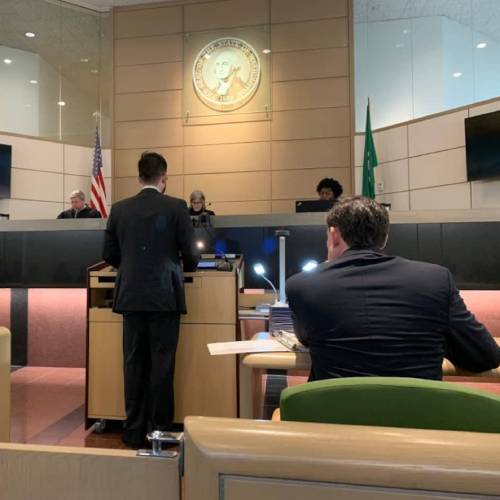
An appeal is not, contrary to popular believe, an opportunity to relitigate a case that went to trial simply because you’re not happy with the outcome. The appellate court will only be reviewing issues of law, that is, errors made by the lawyers or the trial judge. The appellate court will not substitute its own judgment for that of the jury. Importantly, the appellate court will only consider what happened at trial. No new evidence can be introduced. In other words, it is a “closed universe”. Think of an appeal as an opportunity to tell the appellate court why your trial was fundamentally unfair or flawed.
A direct appeal is what occurs after a litigant loses at the trial level. It is also called an “appeal as a matter of right” and must be filed within 30 days of entry of final judgment at the trial level. The trial lawyer can easily accomplish this in order to “preserve the appeal”.
In Washington, there are three divisions of the Court of Appeals: Seattle (Div. I), Tacoma (Div. II), and Spokane (Div. III). Where your appeal is heard will depend on what county your trial originated in.
Appellate courts apply what is called a “standard of review” to the issues raised. There are many types of standards, for example: de novo, abuse of discretion, manifest error etc. Often times, the appellate argument will be won or lost depending on what standard is applied.
There are other types of appeals available to criminal defendants. The most common type in Washington is called a Personal Restraint Petition (“PRP”). This is a collateral attack on the conviction, and the Court of Appeals and Supreme Court have concurrent jurisdiction. The most common way to launch a PRP is based on newly discovered evidence. This can be contrasted from a direct appeal, which only focuses on what happened at the trial.
The appellate process can be long, expensive, and painful. Often times, the appellant is sitting in prison, waiting for his or her conviction to be overturned. If a conviction gets reversed, that is not the end of the process. It will be kicked back down to the trial court for a “redo”. Very rarely will a case get dismissed on appeal. The most common way for that to happen is for insufficient evidence, and it is extremely rare.
It is difficult to adequately inform the client what his or her chances of winning on appeal are until the entire trial record is reviewed. We will never lull you in a false sense of security. But, we will be more than happy to conduct an initial review of your appeal to discuss potential issues and strategies.
The Criminal Appeals Process
1. The Trial
Believe it or not, the appeals process starts at the trial level. As trial lawyers, we always are thinking about issues on appeal when trying a case before a jury. The primary method to preserve an issue for the appellate court’s review is simply to object. That will notify the appellate lawyer to focus his or her attention to that portion of the trial. If the trial lawyer does not object to an objectionable mistake, that may present a different type of appellate issue: ineffective assistance of counsel.
After the jury returns a verdict of guilty, the defendant has 30 days to submit a notice of appeal. If not, the appeal is forfeited. Every trial lawyer should be aware of this.
2. Preparing the Appeal
Once the notice of appeal has been filed, the appellate lawyer can formally begin the appellate process. Gathering the trial transcripts is the first step. Because trials can take weeks, sometimes even months, the trial transcripts often are thousands of pages. The transcript fees can be waived if the defendant is legally indigent. The trial transcripts include every word, gesture, and remark made at the trial. Every word must be reviewed by the appellate attorney to ensure thoroughness.
Then, the appellate lawyer must collect a separate collection of papers, called the “clerk’s papers”. This includes everything that the lawyers filed at the trial level: trial exhibits, witness statements, motions and the like. After that, the lawyer will then “designate” the clerks papers to the appellate court, which means copying the papers that the appellant wishes to have the appellate court review.
It can take a few months for the trial proceedings to be transcribed by the court reporter. Once this is done, the appellate lawyer can begin reviewing the record for appeal.
3. Preparing and Filing the Opening Brief
Every appeal must list “assignments of error”, which is an exhaustive list of legal errors that occurred at the trial. They must direct the appellate court’s attention to where in the trial transcripts the errors occurred. The assignments of error are what the appellate lawyer use to craft the issues on appeal.
After reviewing the trial transcripts and clerk’s papers, the appellate lawyer is tasked with legal research. Finding legal authority to support the issues on appeal is where the real action begins. Crafting persuasive, legally cogent and valid, creative arguments is what will ultimately get a conviction reversed. The appellate lawyer is then tasked with filing the appellate brief with the Court of Appeals. This is the first work product that the appellate lawyer produces. It is restricted to 50 pages and can sometimes be requested for a longer page limit depending on the complexity and length of the trial.
After the opening appellant’s brief is filed, the State then has 60 days to respond with a “response brief”. Because the appellant is the party to initiate the appeal, the appellant has the chance for the last word by filing a “reply brief”.
4. Oral Argument
The Court of Appeals will decide whether or not an oral argument is warranted. Sometimes the Court will summarily decide the case on the merits without scheduling oral argument. There is debate in the legal community what this means, from the Court’s perspective. If oral argument is scheduled, it is often viewed as a sign that the case can go either way. If the Court already had its mind made up one way or another, it probably would not schedule oral argument.
If oral argument is scheduled, the litigants will typically have 10 minutes each to argue their case, with the appellant going first and having the option of reserving a few minutes for rebuttal (again, the appellant gets the last word). This proceeding will be in front of a panel of three judges, who will question the lawyers as to their legal arguments. Often times the judges’ questions can be a forecast of how the Court will rule.
No decision will be rendered on the spot. The Court will take the case under advisement and then issue a formal written opinion. This can take anywhere to a month to over a year, depending on the unique features of the case.
5. The Opinion
The Court will then issue its formal decision, which is called an opinion. If the conviction is reversed, it will then be remanded to the trial court for the State to refile the charges. Sometimes, the case won’t be refiled. Again, every case is different and there is no general rule when it comes to a reversed conviction on remand.
If the appellant loses, he or she may then file an appeal to the Supreme Court for discretionary review. It is not an appeal as a matter of right; the appellant must request permission from the Supreme Court for further review. This must be done within 30 days of the Court of Appeals’ decision.